
AISC Steel Construction Manual 16th Edition PDF: A Comprehensive Overview
The authoritative 16th edition manual, published by AISC, is now accessible; offering professionals a vital resource for steel building design and download options.
The 16th Edition of the AISC Steel Construction Manual represents a significant update to the industry’s cornerstone reference for steel design and construction. Released in 2023, this edition builds upon decades of established practice, incorporating the latest research, code revisions, and practical insights. It serves as a crucial tool for structural engineers, architects, fabricators, and other professionals involved in steel-framed structures.

This comprehensive manual consolidates essential information, streamlining the design process and ensuring compliance with current standards like ANSI/AISC 360-22. Accessibility is key, with the manual available for download from the official AISC website, though licensing and cost considerations apply. Users benefit from a centralized source for steel properties, design methods, and connection details, facilitating efficient and accurate project execution. The manual’s continued evolution reflects AISC’s commitment to advancing the field of steel construction.
What is the AISC Steel Construction Manual?
The AISC Steel Construction Manual is the definitive resource for the design of steel structures in the United States. Published by the American Institute of Steel Construction (AISC), it’s a compilation of codified knowledge, offering practical guidance based on established engineering principles and industry best practices. The 16th edition, available as a PDF, consolidates steel properties, design formulas, tables, and illustrative examples.
Essentially, it’s a ‘how-to’ guide for structural steel design, covering everything from basic material specifications to complex connection details. It’s not a textbook teaching fundamentals, but rather a practical application of those fundamentals. Professionals rely on it daily for efficient and code-compliant designs. Obtaining a legal download ensures access to the most current and accurate information, vital for safe and reliable construction projects.
Importance for Steel Construction Professionals
For steel construction professionals, the AISC Steel Construction Manual, particularly the 16th edition PDF, isn’t merely a reference – it’s an indispensable tool. Structural engineers, detailers, architects, and fabricators depend on its comprehensive data to ensure designs meet safety standards and project specifications. Accurate steel properties, load tables, and design aids streamline workflows and minimize errors.
Staying current with the latest edition is crucial, as building codes and design standards evolve. Utilizing the official download from AISC guarantees compliance and reduces liability. The manual facilitates efficient collaboration between project teams, providing a common language and consistent design approach. Proficiency with the manual is often a requirement for professional certifications and demonstrates a commitment to industry excellence.
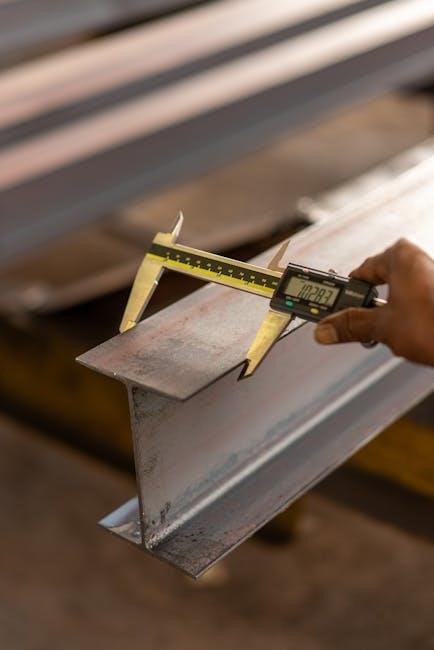
Key Features and Updates in the 16th Edition
The 16th edition incorporates new specifications like ANSI/AISC 360-22, alongside revised design aids, LRFD, and ASD provisions for enhanced accuracy.
New Specifications and Standards Incorporated
The 16th Edition of the AISC Steel Construction Manual prominently features the integration of the latest industry standards, most notably ANSI/AISC 360-22. This specification serves as the cornerstone for structural steel design, ensuring projects adhere to current safety and performance requirements. The manual meticulously details these standards, providing engineers and designers with a readily accessible reference point.
Furthermore, updates reflect evolving best practices and research findings within the steel construction sector. These incorporations aren’t merely additions; they represent a commitment to providing professionals with the most current and reliable information available. Access to these updated standards within the manual streamlines the design process and promotes consistent, high-quality construction practices. The manual’s comprehensive approach ensures compliance and innovation go hand-in-hand.
Changes to Design Aids and Tables
The 16th Edition of the AISC Steel Construction Manual boasts significant enhancements to its design aids and tables, streamlining the workflow for structural engineers. These aren’t simply re-prints; they’ve been meticulously revised and expanded based on the latest research and practical application feedback. Users will find improved clarity, increased accuracy, and a more user-friendly layout within these crucial sections.
Specifically, updates address common design scenarios, offering more readily available data for efficient calculations. The manual’s tables now incorporate a wider range of steel grades and connection types, reducing the need for external references. These changes directly translate to time savings and reduced potential for errors during the design process, making the 16th Edition an indispensable tool for professionals.
Updated Load and Resistance Factor Design (LRFD) Provisions
The 16th Edition of the AISC Steel Construction Manual reflects the most current LRFD specifications, aligning with ANSI/AISC 360-22. These updates are critical for ensuring designs meet the latest safety and performance standards. Significant revisions address stability provisions, incorporating advancements in buckling analysis and bracing design methodologies.
Engineers will find expanded guidance on load combinations, resistance factors, and detailing requirements, promoting more accurate and reliable structural assessments. The manual clarifies complex LRFD concepts through detailed examples and practical applications. These changes ensure compliance with current building codes and best practices, offering a robust framework for safe and efficient steel construction projects.
Revised Allowable Strength Design (ASD) Provisions
While LRFD is the predominant design method, the 16th Edition AISC Steel Construction Manual maintains and updates its ASD provisions for continued usability. These revisions ensure consistency with the latest allowable stress values and detailing requirements, offering a familiar approach for engineers accustomed to ASD.
Updates include refined allowable stress calculations for various steel grades and sections, alongside clarified guidance on deflection limits and serviceability checks. The manual provides comprehensive tables and formulas for ASD-based designs, facilitating efficient and accurate structural analysis. These changes maintain the practicality of ASD while aligning with current material specifications and industry standards, offering a valuable alternative design pathway.
Accessing the AISC Steel Construction Manual 16th Edition
The manual is readily available through the official AISC website, offering both purchase options and potential download access, alongside licensing details.
Official AISC Website Download
Accessing the 16th Edition of the AISC Steel Construction Manual directly through the American Institute of Steel Construction (AISC) website (www.aisc.org) is the most reliable and legal method. The AISC offers various purchasing options, including a full manual purchase and potentially individual chapter downloads, depending on your membership status and specific needs.
While a complete free PDF download isn’t typically available for the entire manual, AISC provides access to several supporting documents and standards – like ANSI/AISC 360-22 – as free PDFs on their site. Registered users often have expanded access to resources. Be cautious of unofficial sources offering complete downloads, as these may violate copyright and contain outdated or inaccurate information. Always prioritize obtaining the manual from the official AISC source to ensure you are utilizing the most current and accurate design guidance.
PDF Availability and Legality
Finding a complete, legally obtained PDF of the AISC Steel Construction Manual, 16th Edition, can be challenging. While numerous online sources claim to offer free downloads, these are often unauthorized and represent copyright infringement. Utilizing such sources carries legal risks and exposes you to potentially inaccurate or outdated information, compromising structural integrity.
The AISC actively protects its intellectual property. Purchasing the manual directly from the AISC website (www.aisc.org) guarantees a legitimate copy. Beware of websites offering the manual for free; they may contain malware or be part of phishing schemes. AISC does offer select standards and specifications as free PDF downloads, but the full manual requires purchase. Respecting copyright ensures continued development and improvement of this crucial resource for steel construction professionals.
Cost and Licensing Information
The cost of the AISC Steel Construction Manual, 16th Edition, varies depending on the format and whether you are an AISC member. As of late 2023/early 2024, a physical copy typically ranges from $200 to $300, while the electronic version (PDF) is generally priced slightly lower. AISC members often receive significant discounts on both print and digital versions.
Licensing is generally tied to individual use. Sharing a purchased PDF with non-members violates the licensing agreement. Institutional licenses are available for universities and larger organizations, offering multi-user access at a negotiated rate. Detailed pricing and licensing terms are readily available on the official AISC website (www.aisc.org). Always verify current pricing as it is subject to change.
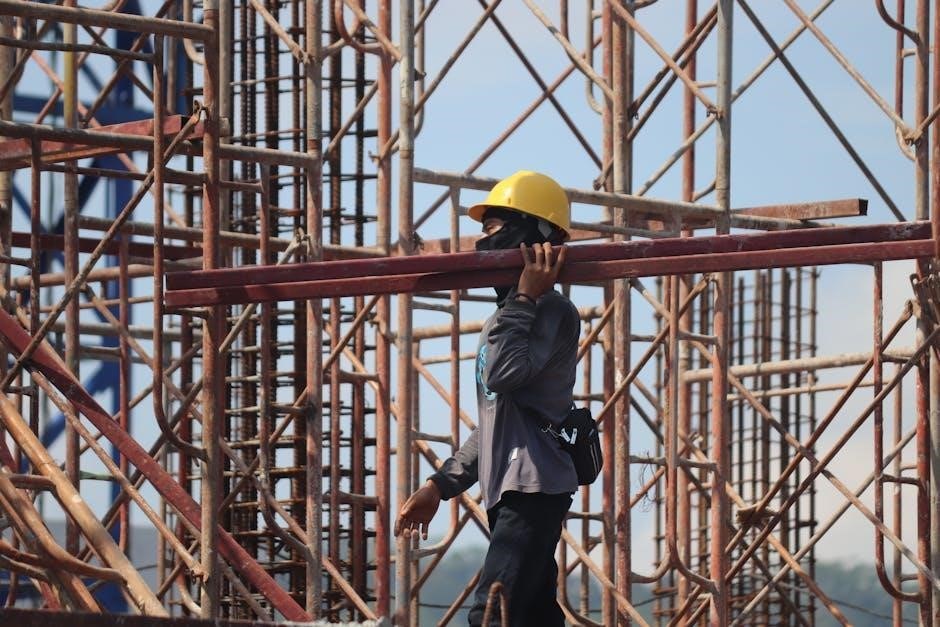
Core Content Covered in the Manual
The manual comprehensively details steel properties, design of beams, columns, connections, and stability, providing essential data for structural engineers and designers.
Steel Properties and Material Specifications
Chapter B of the 16th edition AISC Steel Construction Manual meticulously outlines the properties of structural steel, serving as a foundational element for accurate design calculations. This section details various steel grades, including their yield strength, tensile strength, and modulus of elasticity. It provides comprehensive specifications covering chemical composition, manufacturing processes, and quality control measures.
Furthermore, the manual presents data on steel’s physical properties like density and thermal expansion. Crucially, it incorporates updated material specifications aligned with ANSI/AISC 360 standards. Engineers rely on this information to select appropriate steel materials for specific applications, ensuring structural integrity and compliance with building codes. The manual’s detailed presentation of these properties minimizes design uncertainties and promotes safe, efficient steel construction.
Beam Design – Flexure and Shear
The AISC Steel Construction Manual, 16th edition, provides extensive guidance on beam design, focusing on both flexure and shear considerations. It details procedures for calculating bending moments and shear forces in various beam configurations, utilizing both Load and Resistance Factor Design (LRFD) and Allowable Strength Design (ASD) methodologies.
The manual offers design aids, tables, and equations for determining required beam sizes and verifying their adequacy under applied loads. It addresses topics like lateral-torsional buckling, shear buckling, and deflection control. Updated provisions reflect the latest research and industry best practices. Engineers can efficiently design safe and economical steel beams using the manual’s clear explanations and practical examples, ensuring structural performance and code compliance.
Column Design – Axial and Bending
The 16th edition AISC Steel Construction Manual delivers comprehensive resources for column design, addressing both axial loads and bending moments. It presents detailed methods for determining column buckling strength, considering various end conditions and bracing configurations. The manual incorporates updated LRFD and ASD provisions for column stability, including checks for global buckling, local buckling, and combined axial-bending effects.
Designers will find extensive tables and formulas for calculating column capacities, selecting appropriate steel shapes, and ensuring structural integrity. The manual clarifies complex concepts and provides practical guidance on designing columns for a wide range of loading scenarios, ultimately supporting safe and efficient steel structures.
Connection Design – Bolted and Welded
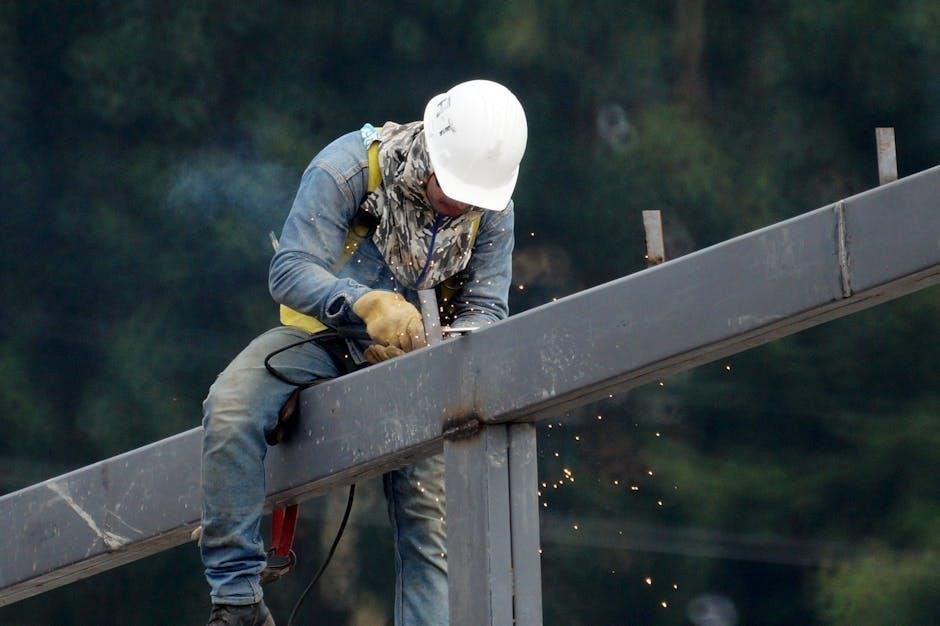
The AISC Steel Construction Manual, 16th Edition, provides exhaustive guidance on designing both bolted and welded connections, crucial for steel frame integrity. It details procedures for calculating connection strength, considering bolt slip, shear rupture, and bearing failure modes. Updated provisions for weld strength and fatigue resistance are included, alongside detailed specifications for weld types and electrode selection.
The manual offers design aids and tables for various connection configurations, simplifying the process of selecting appropriate bolt sizes, spacing, and weld sizes. It addresses both simple and complex connections, ensuring designers can confidently create robust and reliable steel structures. Practical examples and clear explanations enhance understanding and application.
Stability Design – Buckling and Bracing
The 16th Edition AISC Steel Construction Manual dedicates significant coverage to stability design, addressing potential buckling failures in steel members. It provides detailed methods for calculating critical buckling loads, considering various end conditions and loading scenarios. Updated provisions reflect the latest research on bracing effectiveness and slenderness ratios.
Designers will find comprehensive guidance on designing bracing systems – both individual members and overall frame bracing – to prevent lateral-torsional buckling and other instability issues. The manual includes design aids and tables for determining required bracing member sizes and spacing. It emphasizes the importance of considering both elastic and inelastic buckling behavior for accurate and safe designs.

Specific Sections and Chapters
Key chapters, like B (Properties), C (Tension), D (Compression), E (Beam Columns), and F (Connections), offer detailed design guidance within the AISC Manual.
Chapter B: Properties of Structural Steel
Chapter B of the AISC Steel Construction Manual, 16th Edition, is a foundational resource detailing the essential properties of structural steel shapes. This chapter meticulously presents data on wide-flange beams, channels, angles, tees, and hollow structural sections (HSS). It includes comprehensive tables listing dimensions, areas, radii of gyration, and section moduli – critical values for structural analysis and design.
Furthermore, Chapter B provides information on material specifications, including yield strength, tensile strength, and elongation requirements, aligning with current ASTM standards. It’s a vital reference for engineers needing precise material characteristics to ensure safe and efficient steel construction. The 16th edition incorporates updated material grades and property values, reflecting advancements in steel production and testing methodologies. Accurate data from this chapter is paramount for reliable structural calculations.
Chapter C: Tension Members
Chapter C within the AISC Steel Construction Manual, 16th Edition, comprehensively addresses the design of steel members subjected to tensile forces. This section details procedures for calculating the design strength of various tension member types, including rolled shapes, plates, and angles. It covers both yielding and fracture limit states, providing equations and guidelines for determining the nominal and design tensile strengths.
The chapter meticulously outlines considerations for hole spacing, shear lag, and connection details, all crucial for accurate tension member design. Updated provisions in the 16th edition reflect the latest research and code revisions, ensuring compliance with current industry standards. Engineers rely on Chapter C for designing truss members, bracing systems, and other structural elements primarily resisting tension, utilizing the manual’s detailed tables and design aids.
Chapter D: Compression Members
Chapter D of the AISC Steel Construction Manual, 16th Edition, provides exhaustive guidance on the design of steel members resisting compressive loads. This crucial section details methods for calculating the compressive strength of columns, struts, and other compression-bearing elements. It thoroughly covers various buckling modes – global, local, and distortional – and presents equations for determining the critical buckling load and design compressive strength.
The 16th edition incorporates updated slenderness limits and stability provisions, reflecting advancements in research and code development. Engineers utilize Chapter D’s detailed tables and design aids to efficiently design columns with various end conditions and cross-sections. Considerations for effective length, residual stresses, and material properties are meticulously addressed, ensuring safe and reliable compression member designs, compliant with ANSI/AISC 360 standards.
Chapter E: Beam Columns
Chapter E within the AISC Steel Construction Manual, 16th Edition, focuses on the complex design of beam-columns – members subjected to both axial loads and bending moments. This section provides comprehensive methods for determining the design strength of these critical structural elements, accounting for combined loading effects. It details interaction equations and stability checks, crucial for ensuring structural integrity under realistic conditions.
The updated 16th edition incorporates refined provisions for biaxial bending and considers the influence of shear forces. Engineers leverage the chapter’s detailed tables and design aids to efficiently analyze and design beam-columns with various end conditions and loading scenarios. The manual clarifies procedures for determining effective lengths and applying appropriate stability factors, ensuring designs adhere to ANSI/AISC 360 specifications and maintain structural safety.
Chapter F: Tension Splices and Connections

Chapter F of the AISC Steel Construction Manual, 16th Edition, comprehensively addresses the design of tension splices and connections, vital for transferring tensile forces within steel structures. This section details procedures for designing bolted and welded splices, ensuring efficient force transmission and structural integrity. It provides detailed guidance on calculating splice strength, considering factors like bolt patterns, weld sizes, and material properties.
The 16th edition updates incorporate revised provisions for slip-critical connections and bearing-type connections, alongside enhanced design aids for determining required bolt spacing and edge distances. Engineers utilize the manual’s tables and examples to design connections that meet the demands of various loading conditions, adhering to ANSI/AISC 360 standards. Proper design, as outlined, prevents premature failure and ensures overall structural reliability.

Utilizing the Manual for Practical Applications
The 16th edition’s design examples, software compatibility, and troubleshooting guidance empower engineers to efficiently and accurately apply AISC standards to real-world projects.
Design Examples and Case Studies
The AISC Steel Construction Manual, 16th Edition, significantly enhances practical application through detailed design examples and illustrative case studies. These examples demonstrate the implementation of the manual’s provisions for various structural scenarios, offering step-by-step solutions for common design challenges.
Professionals can leverage these resources to understand complex calculations and design methodologies, improving their proficiency in utilizing the latest AISC specifications. The case studies present real-world projects, showcasing how the manual’s guidelines are applied in practical construction settings. This allows engineers to learn from successful implementations and avoid potential pitfalls.
Furthermore, the manual’s examples cover a broad range of structural elements, including beams, columns, connections, and bracing systems, ensuring comprehensive coverage for diverse project requirements.
Software Integration and Compatibility
The AISC Steel Construction Manual, 16th Edition, acknowledges the crucial role of software in modern steel design and strives for seamless integration with industry-standard engineering tools. While the manual itself isn’t software, its provisions are meticulously incorporated into leading structural analysis and design software packages.
This compatibility ensures that engineers can directly apply the manual’s latest specifications and guidelines within their preferred digital workflows. Software developers actively update their programs to reflect changes in the AISC standards, providing users with accurate and reliable results.
The manual’s clear presentation of design rules facilitates the accurate coding and implementation of these provisions within software algorithms, minimizing errors and streamlining the design process. Engineers should always verify software updates to ensure full compliance with the 16th Edition.
Troubleshooting Common Design Issues
The AISC Steel Construction Manual, 16th Edition, serves as an invaluable resource for resolving typical challenges encountered during steel design. It provides detailed guidance on addressing issues related to stability, connection detailing, and load application, offering practical solutions based on established engineering principles.
Common problems, such as local buckling, shear lag, and weldment stresses, are thoroughly addressed with illustrative examples and clear explanations. The manual’s comprehensive tables and charts aid in quickly identifying potential weaknesses and selecting appropriate design adjustments.
Engineers can leverage the manual’s provisions to systematically diagnose design flaws and implement effective corrective measures, ensuring structural integrity and code compliance. Careful attention to the manual’s recommendations minimizes the risk of costly errors and rework during construction.

Related AISC Resources
AISC offers supplementary standards like ANSI/AISC 360, insightful Design Guides, and valuable Courses/Seminars to enhance understanding and application.
AISC Standards (ANSI/AISC 360)
ANSI/AISC 360-22, the Specification for Structural Steel Buildings, is a cornerstone resource closely integrated with the 16th Edition Manual. This standard defines acceptable engineering practices for design, fabrication, and erection of steel structures. It’s frequently referenced within the Manual, providing the foundational rules and requirements for safe and reliable steel construction.
The 16th Edition incorporates the latest revisions to ANSI/AISC 360, ensuring designs adhere to current industry best practices. Professionals can find Part 16 of the Manual dedicated to printing these crucial standards. Accessing both resources together streamlines the design process, offering a cohesive and up-to-date framework for structural steel projects. Understanding these standards is paramount for compliance and structural integrity.
AISC Design Guides
AISC Design Guides complement the 16th Edition Steel Construction Manual, offering in-depth explorations of specialized steel design topics. These guides delve into areas beyond the scope of the Manual, providing detailed guidance on complex subjects like buckling, fatigue, and high-strength bolts. They are invaluable resources for engineers tackling unique or challenging projects.
While the Manual provides fundamental design information, the Design Guides offer advanced analysis and design methodologies. Utilizing both resources ensures a comprehensive understanding of steel behavior and optimal design solutions. These guides are frequently updated to reflect the latest research and industry advancements, supporting continuous professional development. Accessing these guides alongside the 16th Edition Manual empowers engineers to create innovative and efficient steel structures.
AISC Courses and Seminars
To maximize proficiency with the 16th Edition Steel Construction Manual and related standards, AISC offers a robust portfolio of courses and seminars. These educational programs cater to diverse experience levels, from introductory overviews to advanced topics in steel design and construction. They provide practical application of the Manual’s provisions, enhancing engineers’ ability to implement code requirements effectively.
AISC’s courses cover LRFD and ASD methodologies, connection design, stability considerations, and more. Seminars often feature real-world case studies and hands-on exercises, fostering a deeper understanding of complex concepts. Investing in AISC education ensures professionals remain current with industry best practices and can confidently utilize the 16th Edition Manual for successful project outcomes.